How retaining walls work
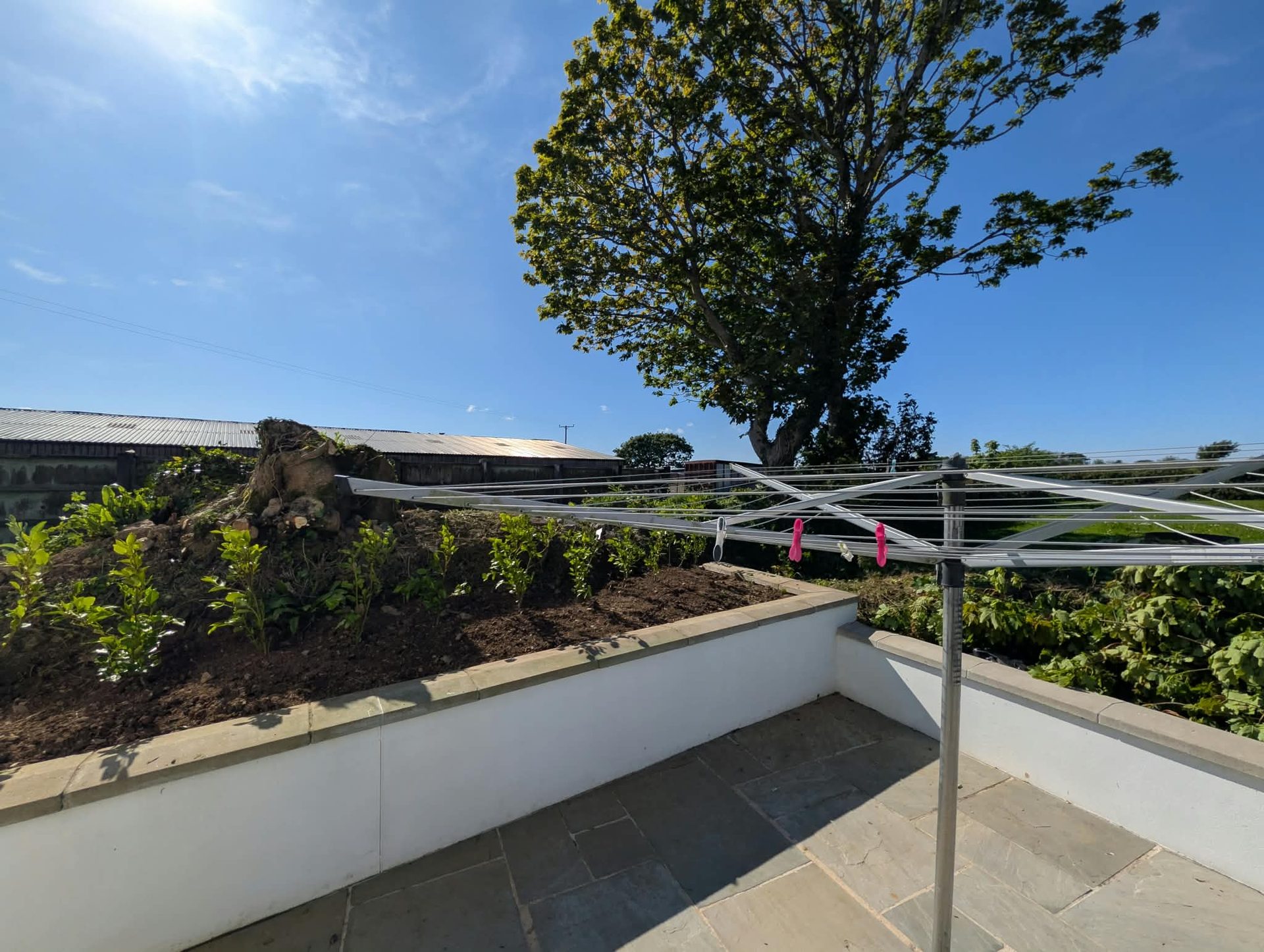
A retaining wall resists the sideways pressure of soil and water. Foundations, construction and drainage behind the wall all matter: drainage especially, because trapped water is what pushes walls over.
Walls that hold back slopes, create level terraces and restore old stonework, built to carry the load of the ground behind them.
5.0 · 13 Google reviews
5-star rated
13 Google reviews
Written contract
On every job
Warranty
Typically 2 years
Fully insured
Employer's & public liability
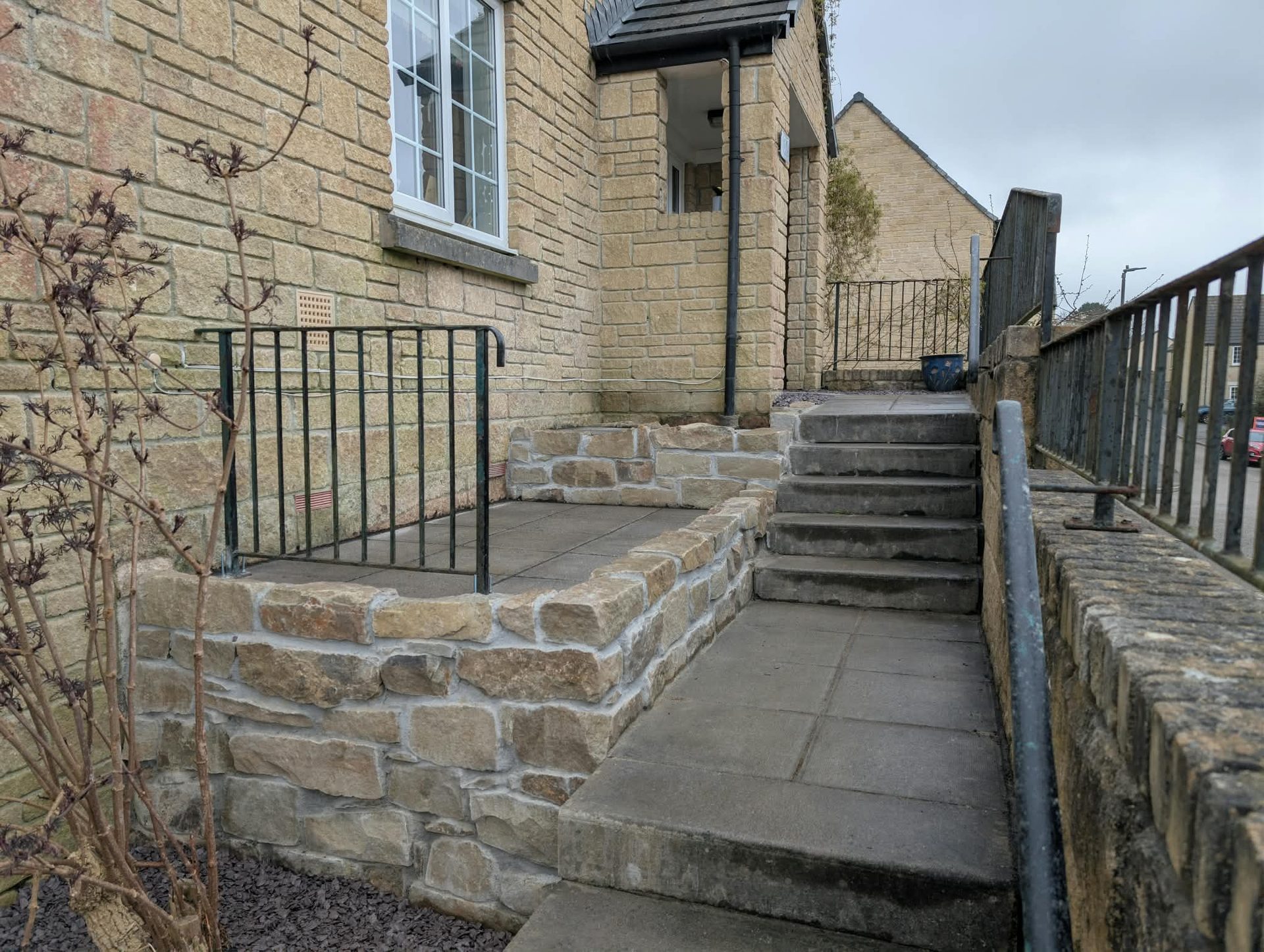
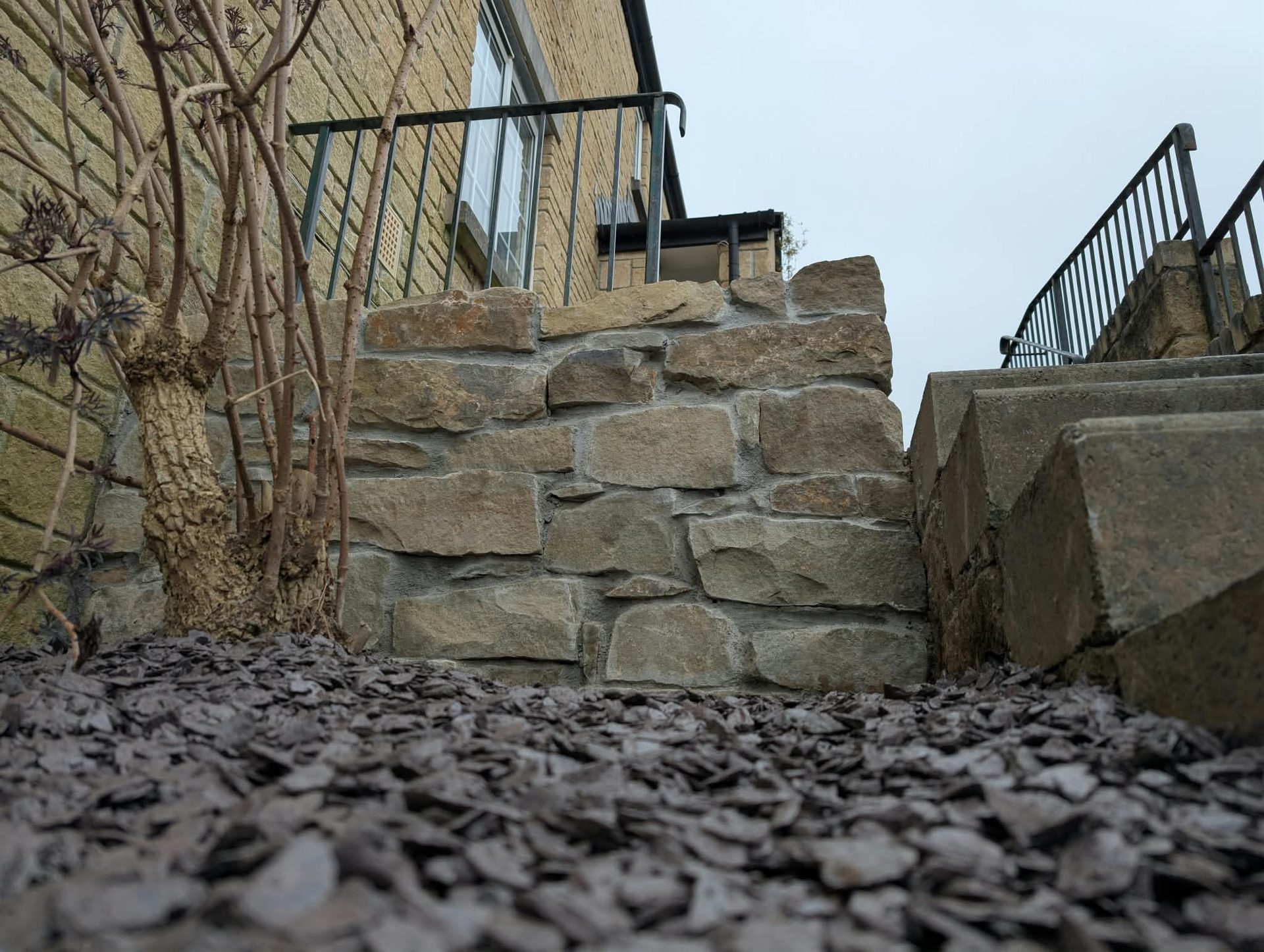
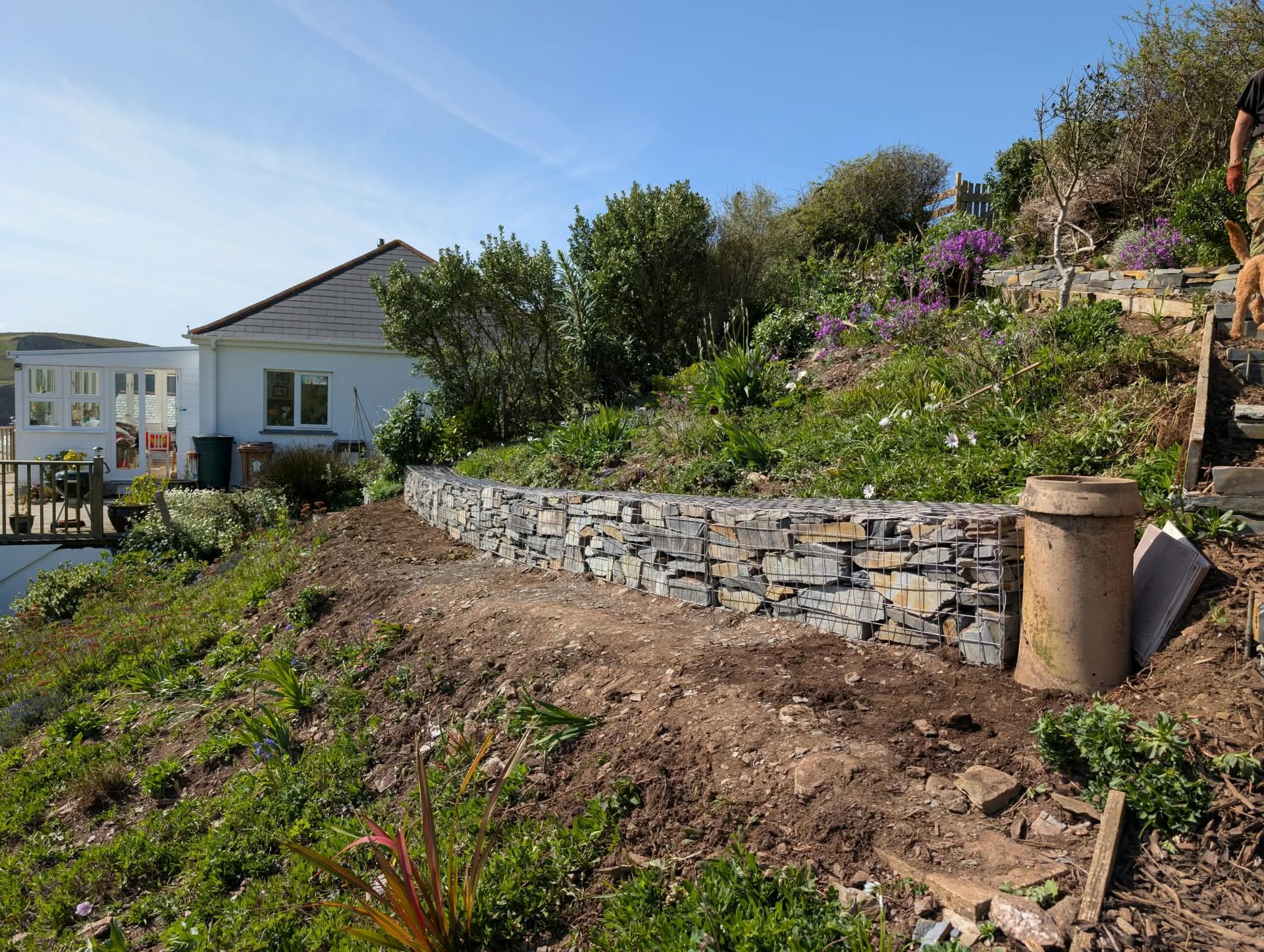
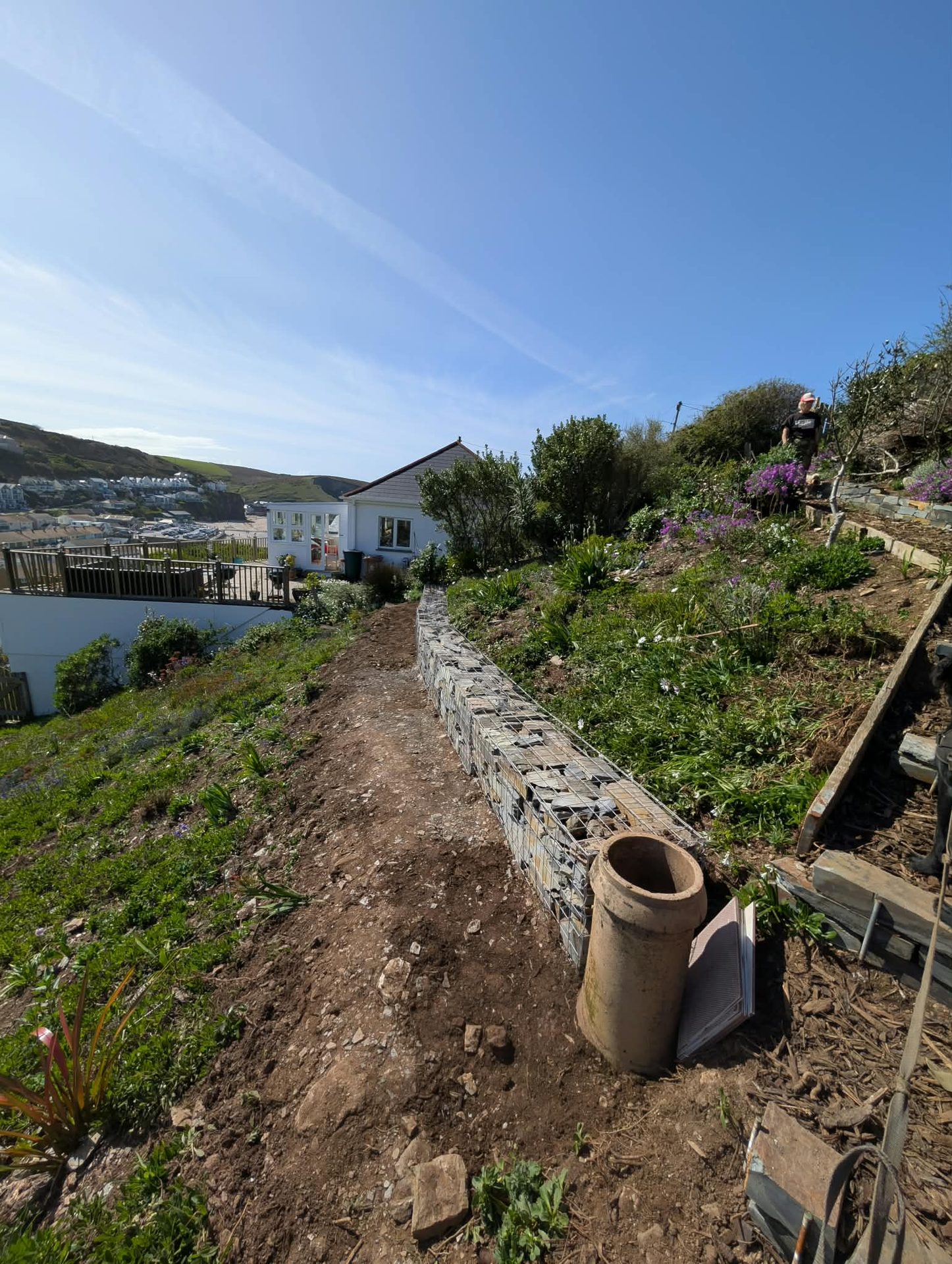
Retaining walls do serious work: they hold back tonnes of soil and water. Built well, they turn a slope into usable terraces. Built poorly, they bulge, crack and eventually fail.
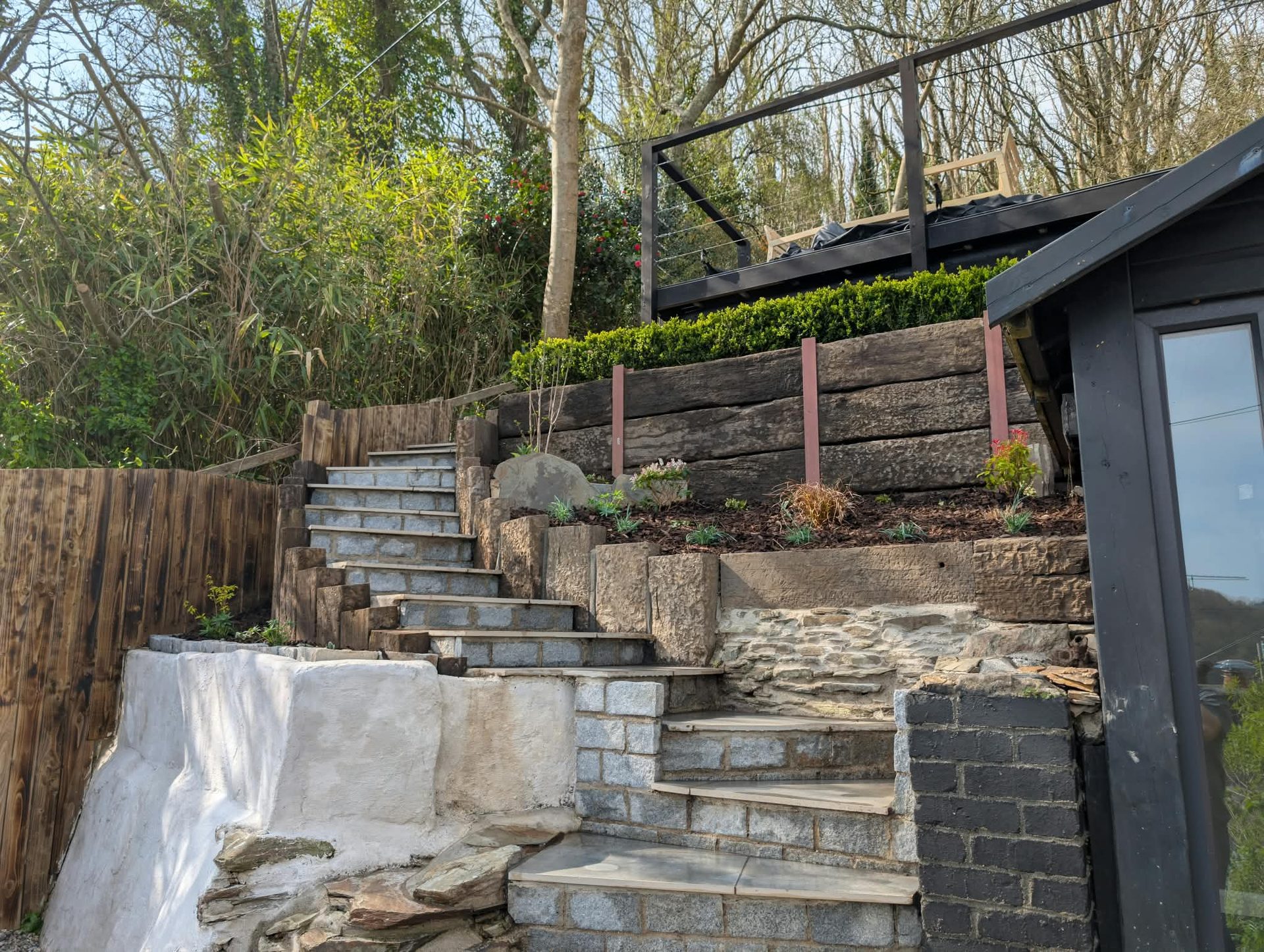
Walling is at the heart of what we do. We've built four sets of walls on a steep hillside garden, rebuilt a very old wall so it became a garden feature, and restored old walls for customers across Cornwall.
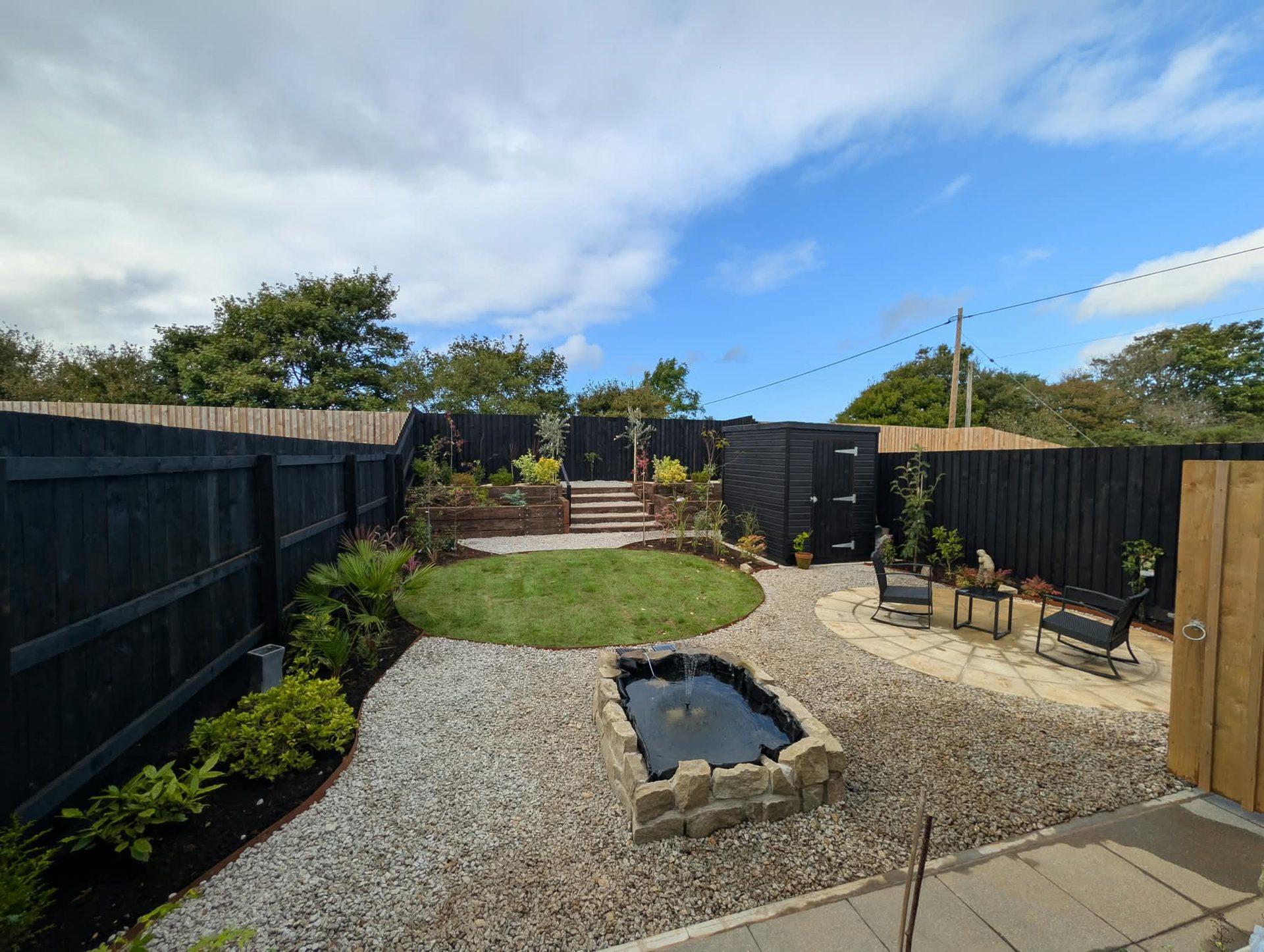
Cornish walling adds character that suits the local landscape, and we combine walls with steps, patios and drainage to create complete, usable levels.
Walls without drainage build pressure behind them until they move.
A failing retaining wall can collapse, taking soil, patios or paths with it.
Without walls, steep ground stays steep.
Old stone walls left unrepaired deteriorate quickly.
We come out, walk the garden with you and look at access, levels, ground conditions and drainage.
We explain what the job involves and how long it will take, then put a detailed quote in writing.
Clearing, digging out, levelling and drainage. Getting this right is what makes the finished work last.
The work itself, done by Harry and the team.
We walk you through the finished job. Your written contract and warranty (typically 2 years) are yours to keep.
Slopes turned into level space.
Pressure relieved so walls stay put.
Cornish walling that suits the landscape.
Old walls rebuilt to become features.
Walls, steps, patios and drainage together.
Written contract and warranty, typically 2 years.
“2 sets of excellent work landscaping our very steep coastline garden by Harry and Mat”
A retaining wall resists the sideways pressure of soil and water. Foundations, construction and drainage behind the wall all matter: drainage especially, because trapped water is what pushes walls over.
Traditional Cornish walling uses local stone laid in a style that belongs in the landscape. It's ideal for boundaries, terraces and garden features that need to look as though they've always been there.
Many Cornish gardens have old walls that have slumped or partly collapsed. We've rebuilt very old walls so they became a feature of the garden again.
On steep plots we combine multiple walls with steps, patios, decks and drainage. One hillside project needed four sets of walls plus new patios, decks and plumbing to sort drainage.
We're based in Truro and carry out retaining walls and Cornish walling across Cornwall: Retaining Walls & Cornish Walling Truro, Retaining Walls & Cornish Walling Falmouth, Retaining Walls & Cornish Walling Penryn, Retaining Walls & Cornish Walling Redruth, Retaining Walls & Cornish Walling Camborne, Retaining Walls & Cornish Walling St Austell, Retaining Walls & Cornish Walling Newquay, Retaining Walls & Cornish Walling St Agnes, Retaining Walls & Cornish Walling Perranporth.
Before choosing materials, think about who will use the garden and when. A space for summer dining needs different sizing, shelter and access from a low-maintenance front garden or a holiday let that needs to look smart between guests. Tell us how you live and we'll shape the retaining walls and Cornish walling around it.
Slope, soil, existing walls, hedges and drainage all affect what's possible and what it costs. In Cornwall, many gardens are steep, rocky or exposed to the coast. We assess all of this on our first visit so your quote reflects the real job: not a best-case guess that changes once work starts.
Retaining Walls & Cornish Walling rarely sits in isolation. It meets lawns, beds, boundaries, paths and steps. Planning these together avoids the cost of reworking levels or access later, and gives you a garden that feels designed rather than added to piece by piece.
Across 13 five-star Google reviews, the same themes come up again and again: punctuality, quick responses, professionalism, quality workmanship, detailed quotes and creative design ideas, and an ability to handle difficult sites such as steep slopes and coastal gardens.
Harry Lyall runs every job, working alongside his colleague Matt. You deal with the people doing the work, from the first visit to the finished garden, so nothing gets lost between the quote and the build.
Every retaining walls and Cornish walling job is covered by a full written contract and a warranty, typically 2 years, confirmed in writing for your specific job, and by our employer's and public liability insurance. You know what's included, what it costs and what happens if anything isn't right.
Ready to talk it through? Call 07938 652967 (Mon–Fri, 8am–5pm), or request a quote online. You can also browse our homepage or all services.
Yes, we've built four sets of walls on a steep hillside garden.
Yes, we've rebuilt and restored old walls.
Yes. Drainage behind the wall is essential, and we build it in.
Yes, steps are often part of terracing projects.
It depends on length, height and access. We'll explain when we quote.
Every garden is different: access, ground conditions, slope and materials all change the price. Rather than guess, we visit, talk through the job and give you a detailed written quote so you know exactly what's included before anything starts.
Yes. Every job comes with a full written contract and a warranty. The length depends on the job and is typically 2 years; we'll confirm it in writing on your quote.
Yes. We hold both employer's liability and public liability insurance.
We're based in Truro and work across Cornwall, including Falmouth, Penryn, Redruth, Camborne, St Austell, Newquay, St Agnes and Perranporth. If your town isn't listed, call us and we'll tell you straight away.
A detailed written quote, a written contract and a warranty, typically 2 years, on every job. Rated 5.0 from 13 Google reviews.